
We’ve spent the last couple of years treating generative AI like a vending machine. Select a task. Insert a prompt. Retrieve a product. And to be fair, in many legal and professional contexts that’s exactly the right frame: accuracy and precision matter and “creative” output in payroll or billing codes is usually just a polished

I had a long session recently with a public genAI tool that taught me something more important than the topic I started with.

The lesson was not about whether the model was “smart enough.” It was about control. At a certain point, I realized I was no longer simply prompting an LLM. I was negotiating

I have just posted a trio of new research white papers to SSRN. These represent the latest output from the Kennedy Idea Propulsion Laboratory and the culmination of my work over the last month to move AI beyond “utilitarian drift.” This is the cycle of incremental efficiency gains that ultimately generates no transformative insight.

An investigation into why serious AI work depends less on clever prompts and more on defending invariants, boundaries, and human judgment.

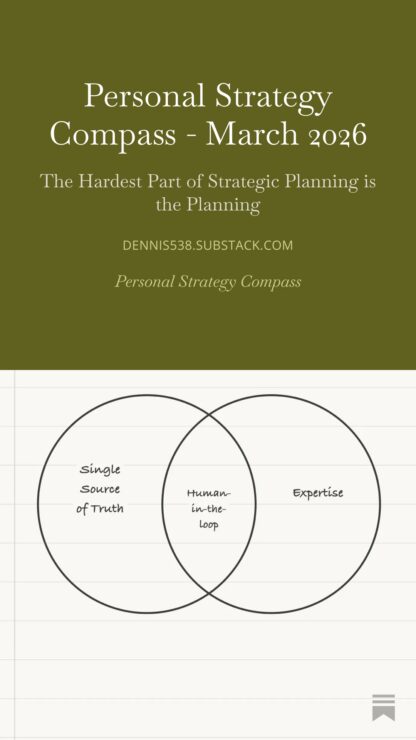
At the end of a long, technical AI session this week, something became clear to me: human-in-the-loop is being misunderstood in ways that matter.

The issue wasn’t whether the system could generate outputs quickly

    To propose a Preliminary Inquest, please complete the form below.

    I review all submissions personally and provide an initial Wicked vs. Tame assessment at no charge within 5–7 business days.

    Contact Information


    The Problem


    Organizational Readiness

    If this investigation reveals you're solving the wrong problem, does your organization have the authority and willingness to change course? (required)


    Timeline

    Desired timeline (required)


    How did you hear about KIPL?


    Kennedy Idea Propulsion Laboratory logo

    In 1980, I wrote a senior thesis paper called “Imagination: A Romantic Ideal.” My investigation then was a critique of the German and English Romantics who, in their zeal to undo the “damage” of Enlightenment Reason, merely erected a new idol: The Imagination.

    Through a concrete analysis of Keats and Poe, I discovered a truth

    The Kennedy Idea Propulsion Laboratory investigates human-AI interaction challenges when standard playbooks fail. Research focuses on developing frameworks for complex problem diagnosis, investigative methodology, and collaborative intelligence systems.


    FEATURED INVESTIGATION

    Human-in-the-Loop (HITL) Interaction Design

    Investigating how humans and AI systems can work together to amplify insight rather than automate judgment. The research challenges the prevailing