Options, Not Pilots: The Mechanics of AI Capital Allocation

The AI proposals arrive at your executive committee one at a time. Knowledge Management wants to test an agentic research workflow. The corporate group wants automated first-pass diligence. Business Development has found a tool that promises to identify cross-selling opportunities from the firm’s relationship data.
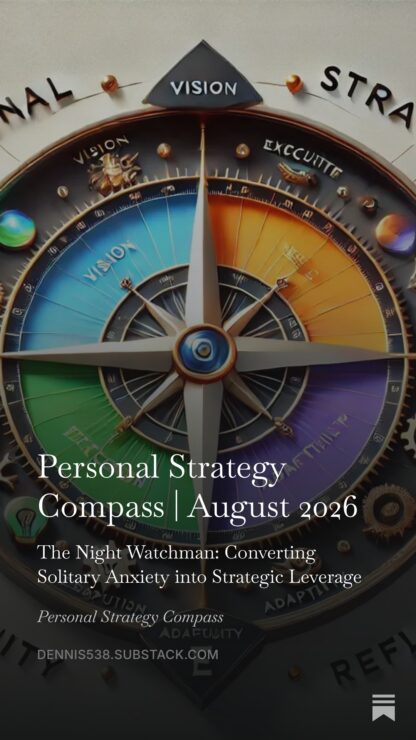

The August issue of my Personal Strategy Compass newsletter is now available: “The Night Watchman: Converting Solitary Anxiety into Strategic Leverage.”

This issue grew out of something I started noticing in my own solitary planning blocks. Once I removed the usual operational noise and created some real white space, my analytical mind did…

Why the OpenAI Hiring Surge Signals a Crisis of Professional Control

The management problem in AI is no longer whether the models are improving. They are. The management problem is whether the working surface is becoming more dependable or less.

That is why the recent OpenAI hiring story on its plan to nearly double its…

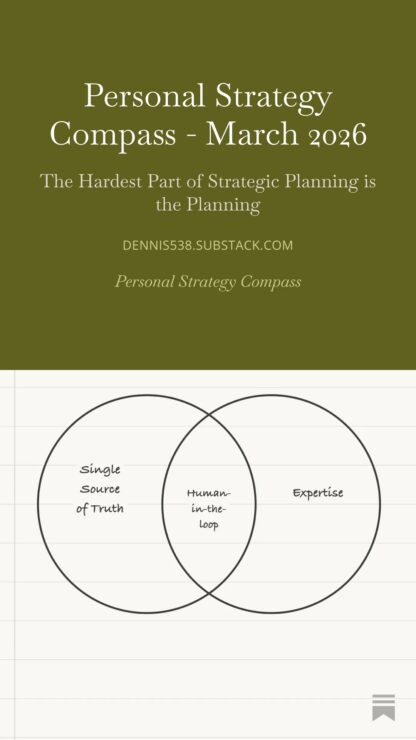
The March issue of my Personal Strategy Compass newsletter is out.

This month’s piece explores something I’ve been noticing about strategic planning. The hardest part is usually not the work of planning itself. It’s the residue that planning drags along with it.

Ideas, priorities, and intentions tend to accumulate. We carry them forward month after…


test


For ambitious professionals, saying “no” is a celebrated strategic act. We use the “Strategic No” to reclaim our time, prune our commitments, and simplify our lives. It’s a powerful feeling of control and liberation.

But what about the day after?

What happens when the relief of a clear calendar fades and you’re left with a…

If you are a high-achieving professional, you live with a fundamental tension. You know that deep, strategic thinking is the engine of your success, yet your calendar is a fortress that rarely permits the quiet time required for it. Important decisions loom, but the sheer complexity of your options leads to the all-too-familiar state of…

I’ve been working on organizing and optimizing my AI prompts and prompting methodologies. I noticed that I have two major categories of approaches.

The first I call “complex, structured prompting.”

Google Gemini describes that, and I think accurately, as “a systematic, engineered way to interact with AI. It’s about building a personalized ‘cognitive operating system’…